

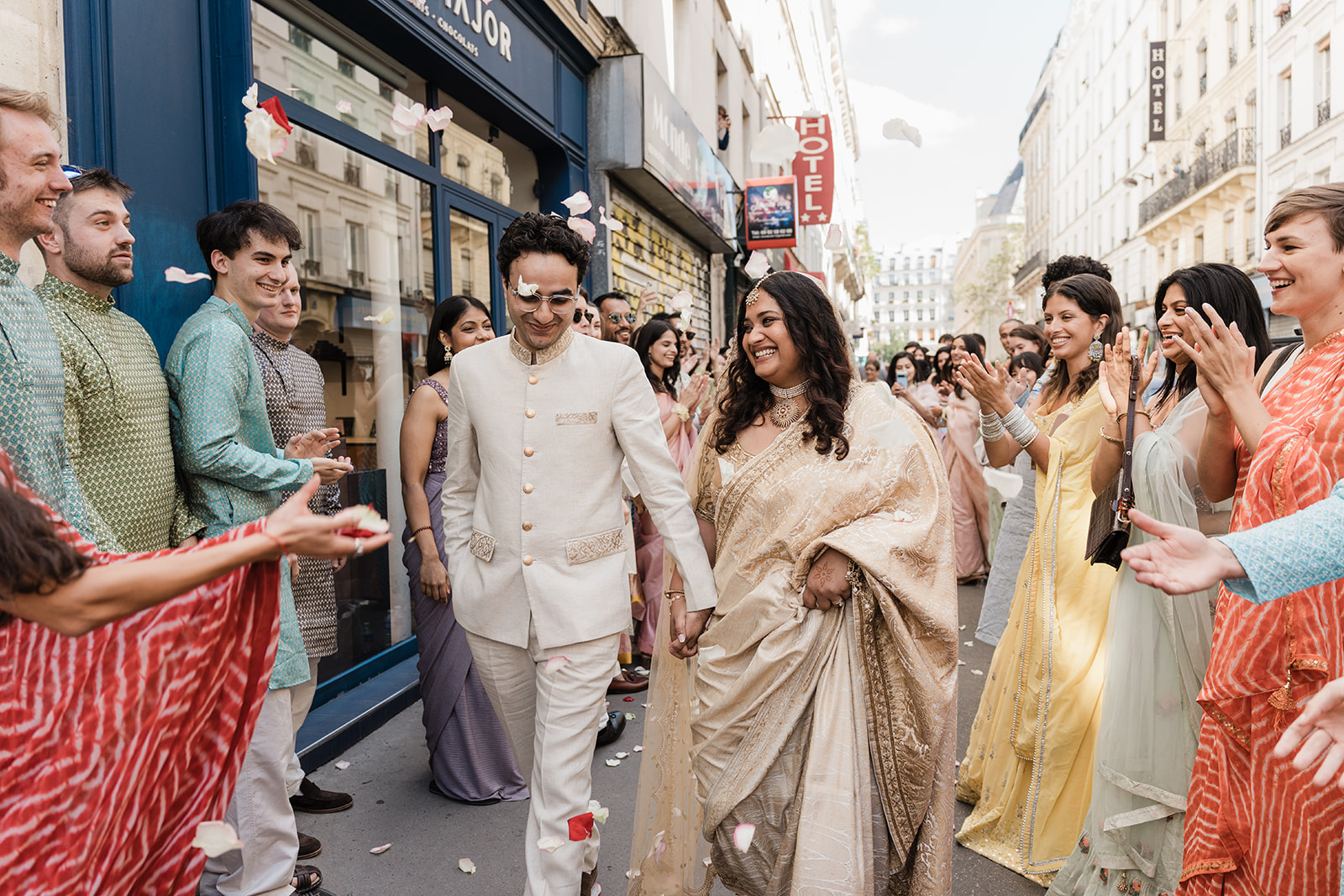
A multicultural wedding rarely fails on the big ideas. Most couples already know they want both families to feel at home. Where it gets difficult is in the details: which language the vows are in, whose ritual happens first, how long the tea ceremony takes, whether the venue allows an open flame, who explains the breaking of the glass to the guests who have never seen it.
This guide is about those details, for couples planning a wedding in France that brings together two cultures, two languages or two faiths, or more. I photograph weddings in Paris and across France for international and queer couples, and I share what each choice changes on the day and in your photos.
The short answer
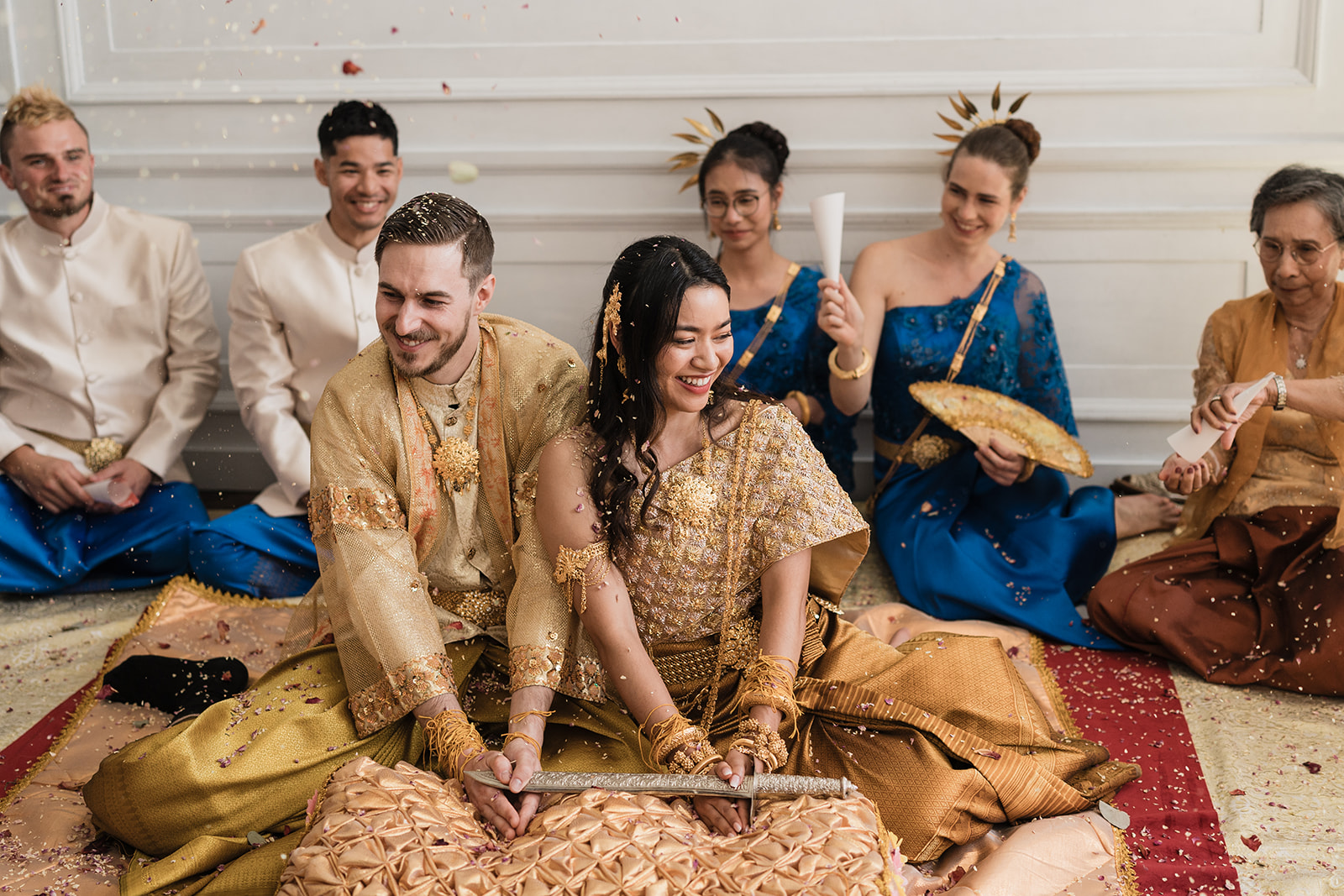
Start with what has to happen legally, then decide which rituals matter to each family, and only then build the day around them. Choose one blended ceremony or two separate ones based on how much each ritual needs its own space. Plan the languages ahead, not on the day. Tell every supplier, including your photographer, what each ritual is, how long it lasts and who must be there.
Start with the legal frame
In France, only the civil ceremony at the mairie creates a legal marriage, and a religious ceremony cannot legally take place before it. The civil ceremony is held in French. If one of you does not speak French, the mairie may ask you to bring an interpreter.
This shapes the rest of the plan. Many multicultural couples marry legally at home, or at the mairie a few days before, and keep the wedding day in France for the ceremony that carries their traditions. I explain the rules in detail in my guide to getting legally married in France as a foreign couple.
Decide which rituals to keep, and why
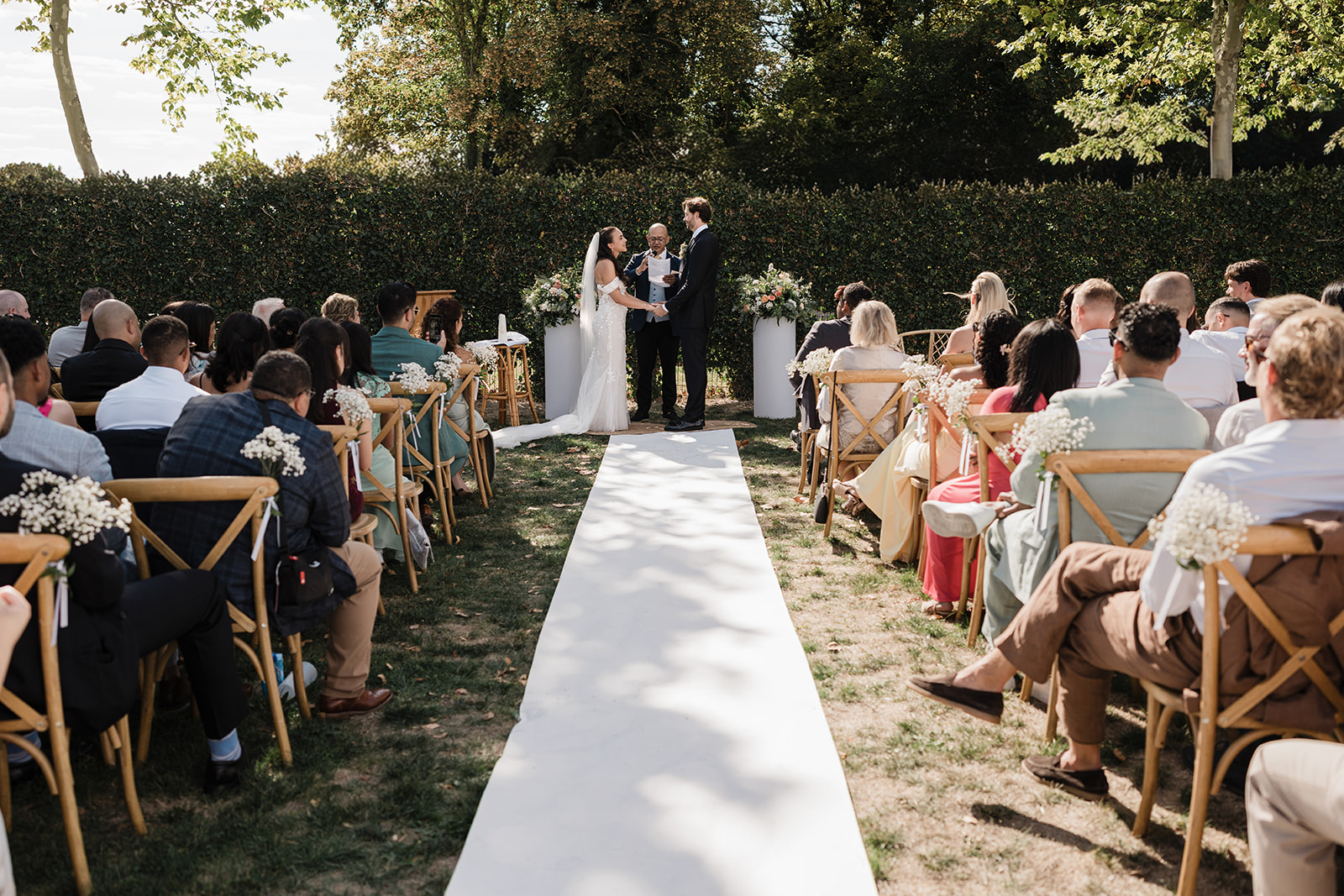
Before you build a programme, sit down with a simple list. For each ritual, write down who it matters to, what it means to them, and what it needs: time, people, objects, space. Some examples couples often bring to France:
- A Chinese tea ceremony, where the couple serves tea to parents and elders, usually in order of seniority.
- A Jewish ceremony under a chuppah, with the signing of the ketubah and the breaking of a glass.
- Hindu rituals such as the haldi before the wedding, or the seven steps of the saptapadi during the ceremony.
- A Greek Orthodox crowning with the stefana.
- The lazo and the arras in many Mexican and Filipino weddings.
- The san-san-kudo, the sharing of sake in three cups in a Japanese ceremony.
Every family practises these differently, and some of your relatives may care far more about one detail than you expected. Ask them early. It is easier to adapt a ritual together months before than to negotiate it the morning of the wedding.
Adapting rituals for queer couples
Many traditions assign roles by gender: who walks in, who gives away, who serves whom. You can keep the meaning and change the roles. Two people can both be accompanied down the aisle, both serve the tea, or share a gesture that was once performed by one partner. Explain the change to the officiant and the family in advance, so nobody improvises it on the day.

One blended ceremony or two separate ones?
There is no right format. It depends on the rituals themselves.
- One blended ceremony works when the rituals are short and symbolic, and when one celebrant can guide everyone through them. It keeps all your guests together.
- Two ceremonies make sense when a ritual needs its own time, clothes or setting, or when it is meant for close family. A tea ceremony in the morning and a symbolic ceremony in the afternoon is a common pattern. So is a religious ceremony one day and a celebration the next.
If you choose two moments, give each one its own space in the timeline, with real time to change, eat and breathe in between. My guide to building a destination wedding timeline in France goes into how much room to leave.
Plan the languages ahead
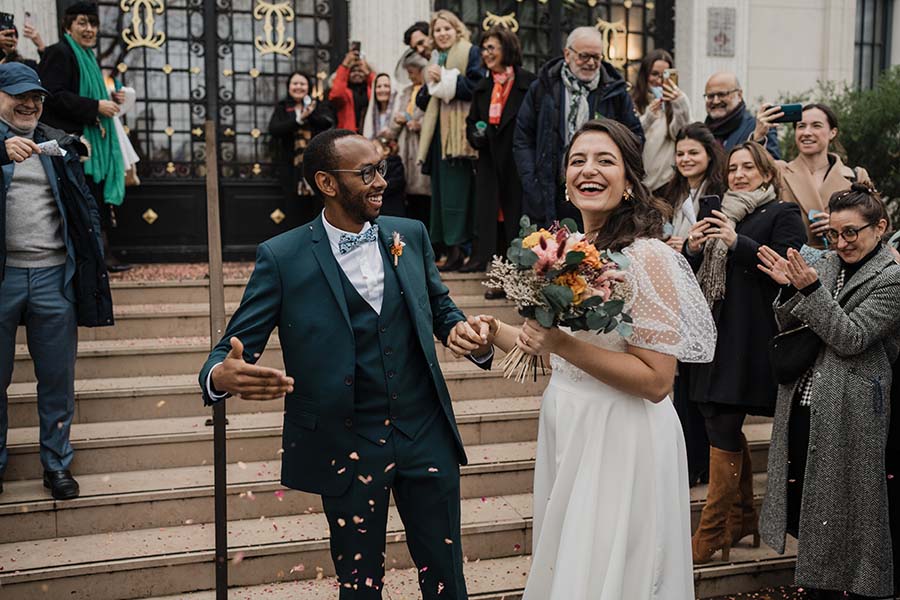
Language is often the part couples leave until last, and the part guests remember most. A few formats that work:
- Alternating languages: the celebrant switches language from one section to the next, rather than translating every sentence.
- Two celebrants or two readers, one for each language, sharing the ceremony.
- Vows in your own language, with a short printed translation in the programme.
- A one-line introduction before each ritual, so guests know what they are about to see and why it matters.
The same thinking applies to speeches. Ask each speaker to keep a few sentences in the other language, or provide a translation on the tables. People forgive an accent; they remember being left out.
Check what the venue allows
Some rituals need things a French venue may not allow by default. Ask before you sign the contract:
- open flames, such as a sacred fire or many candles indoors;
- outside caterers or specific food, as many venues work with a fixed list of caterers;
- a second ceremony space, or time to transform the same space;
- music, drums or dancing late in the evening, as many venues have sound limits or a fixed end time.
If you are still choosing a place, my selection of French château wedding venues and Paris hotels and private clubs is a good starting point for those questions.
What this means for your photos
A photographer cannot anticipate a moment they do not know is coming. Before the wedding, I ask couples for:
- the list of rituals, in order, with roughly how long each one lasts;
- the key moment of each ritual, the one that must not be missed;
- who should appear in the family photos, and in which groups, for each side;
- anything to avoid: a moment that should not be photographed, a relative who prefers not to be, a gesture with a meaning I might misread.
I will not assume what a custom means to you. A short explanation is enough for me to place myself in the right spot, at the right time, without interrupting anything. If you want to understand how I balance observation and direction on a day like this, my article on editorial vs documentary wedding photography explains it.
Frequently asked questions
Can we have a religious ceremony in France before the civil one?
No. In France, the civil ceremony must come first. Many couples marry legally at home or at the mairie a few days earlier, then hold their religious or symbolic ceremony in France.
Can our ceremony be in two languages?
A symbolic or religious ceremony can be in any language you choose. The civil ceremony at the mairie is conducted in French, with an interpreter if one of you does not speak it.
Should we have one ceremony or two?
One blended ceremony suits short, symbolic rituals and keeps guests together. Two ceremonies suit rituals that need their own time, clothes or setting. Build the timeline around the rituals, not the other way round.
How do we explain our rituals to guests who do not know them?
A short introduction from the celebrant before each ritual, a line in the programme, or a note on your wedding website. Keep it brief: one or two sentences on what happens and why it matters to you.
Can same-sex couples adapt traditional rituals?
Yes. You can keep the meaning of a ritual and change who performs it. Agree on the changes with your officiant and your families before the day.
Planning a multicultural wedding in France?
If you want a photographer who asks about your rituals before the day rather than discovering them during it, tell me about your plans. You can also read how I approach queer weddings in France, or see my destination wedding photography page.