

When you start looking for a wedding photographer in France, you quickly meet the same words on every website: editorial, documentary, candid, fine art, loose editorial. They sound precise. In practice, photographers use them very differently, and couples are left guessing what their wedding day will actually feel like.
This guide explains what each style means in concrete terms: how much you will be directed, how much time it takes, and what kind of images you will keep. It also explains why I describe my own work as a blend of the two.
The short answer
Documentary wedding photography records your day as it happens, with little or no direction. Editorial wedding photography is directed: the photographer shapes light, composition and posture, the way a magazine shoot would. Loose editorial sits between the two. It uses light guidance and short prompts rather than fixed poses, so the images look composed but the people in them still look like themselves.
What is documentary wedding photography?
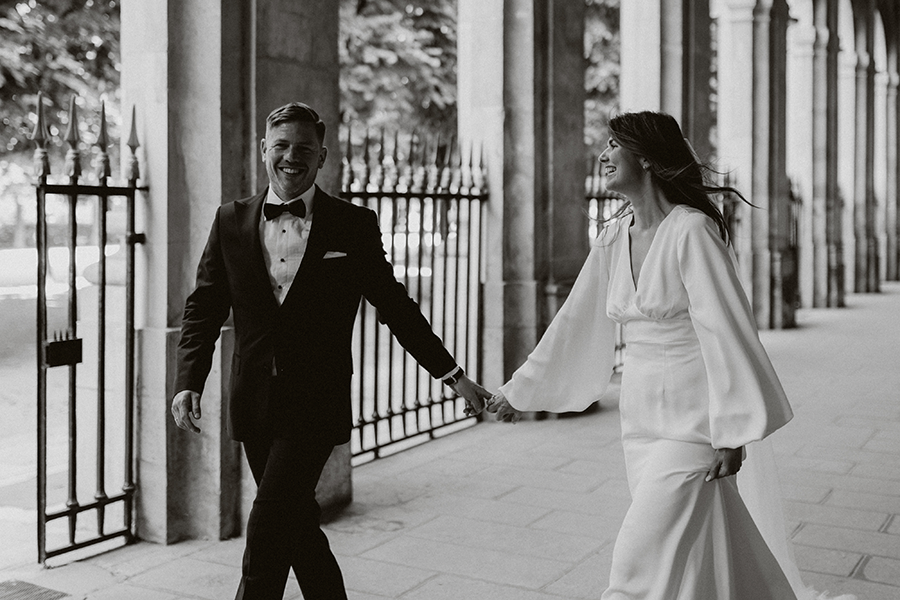
Documentary wedding photography, sometimes called wedding photojournalism or candid photography, treats your wedding as a story to observe rather than a set to stage. The photographer anticipates moments instead of creating them: a parent’s face during the vows, a friend fixing a collar, the noise and mess of the dance floor.
What it gives you:
- Images that feel true years later, because nothing was performed for the camera.
- Very little time away from your guests.
- A full narrative of the day, including the in-between moments you did not see yourselves.
What it asks of you: trust, and some tolerance for imperfection. Pure documentary work depends on what happens in front of the lens. If the light in the room is poor or the timing is tight, the photographer will not intervene to fix it.
What is editorial wedding photography?
Editorial wedding photography borrows from fashion and magazine work. The photographer directs: where you stand, how the light falls on your face, how fabric moves, what the background says. The result is polished, graphic and often striking.
What it gives you:
- Strong portraits that showcase your outfits, your venue and your styling.
- Control over light and composition, even in difficult conditions.
- Images that look intentional, which many couples love for a Paris or château setting.
What it asks of you: time and willingness to be directed. A fully editorial approach needs dedicated portrait sessions during the day. If posing makes you tense, heavily directed images can show it.
So what does “loose editorial” mean?
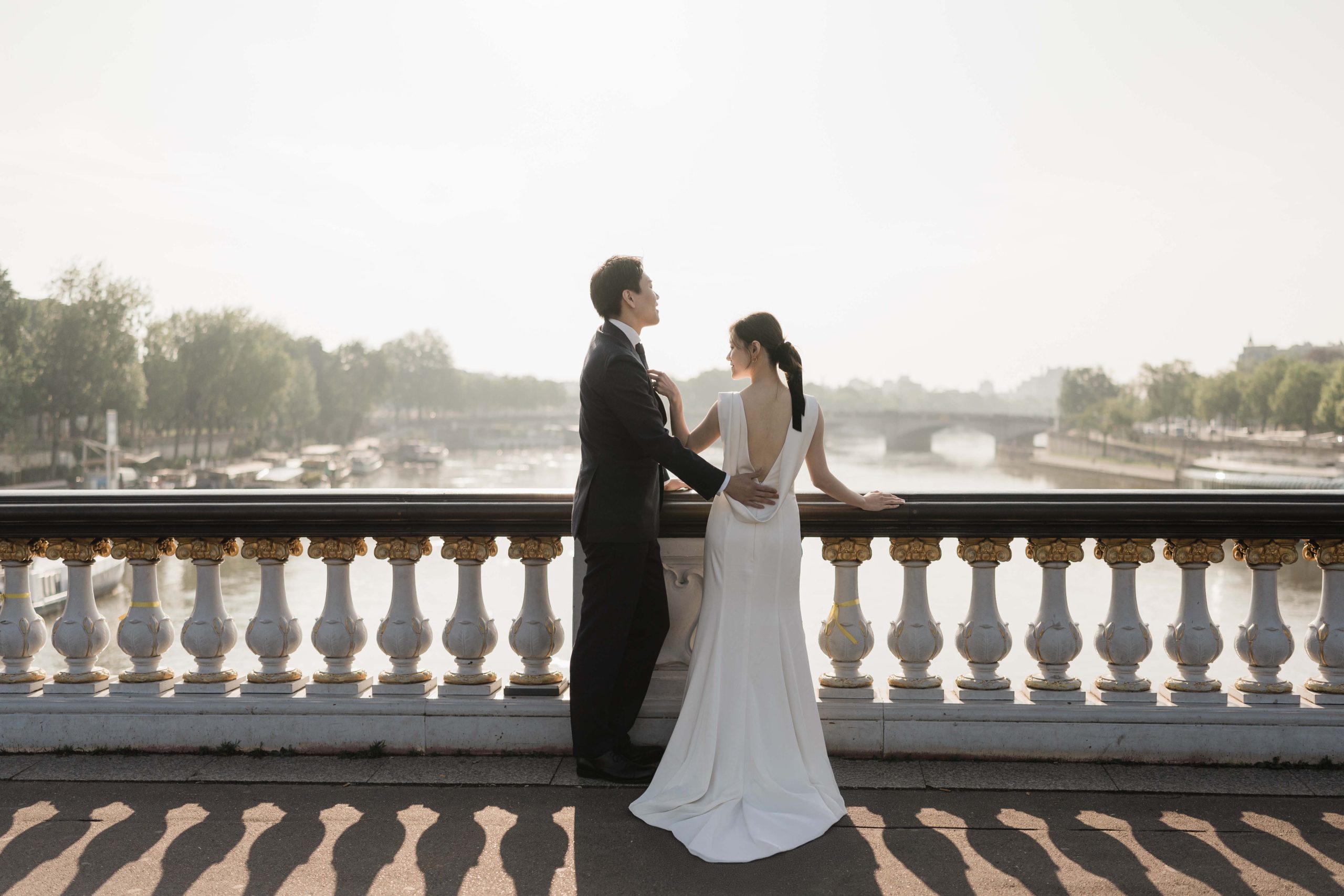
Loose editorial is the term many photographers now use for direction that stays light. Instead of placing every hand, the photographer chooses the setting and the light, then gives you something to do: walk, whisper, turn towards the window, hold each other for longer than feels natural. The frame is designed; what happens inside it is real.
The difference shows in the details. In a strictly posed portrait, expressions are set. In a loose editorial portrait, you see the moment just after the prompt, when you laugh at the instruction or forget the camera for a second. Those are usually the frames couples choose for their walls.
“Docu-edito”, which you may see in French, describes the same idea from the other side: a documentary approach to the day, with short editorial moments woven in.
Editorial vs documentary: how they compare on the day
| Documentary | Loose editorial | Editorial | |
|---|---|---|---|
| Direction | Almost none | Light prompts, chosen light and setting | Detailed posing and styling |
| Time away from guests | Minimal | Two or three short moments | Longer dedicated sessions |
| Look of the images | Natural, spontaneous, narrative | Composed but alive | Polished, graphic, magazine-like |
| Best for | Couples who dislike posing | Couples who want both truth and beauty | Couples with a strong visual concept |
| Main risk | Less control over light and composition | Needs a photographer comfortable with both | Can feel stiff if you are not at ease |
Which style suits you?
There is no better style in general, only a better fit for the way you want to spend your day.
You may lean documentary if…
- You want to stay with your guests as much as possible.
- You feel awkward when asked to pose.
- Your wedding is full of family, speeches and emotion you want recorded as it was.
You may lean editorial if…
- Your styling, fashion or venue matters a lot to you.
- You enjoy being photographed, or want to feel like it for a few minutes.
- You plan time for portraits, for example a session at sunset or the day before.
You are probably a blend if…
- You want the story of the day and a handful of strong portraits.
- You are travelling to France and want the place itself to be visible in your images.
- You want direction that helps you relax rather than direction that performs.
Most of the international couples I photograph in France fall into this last group.

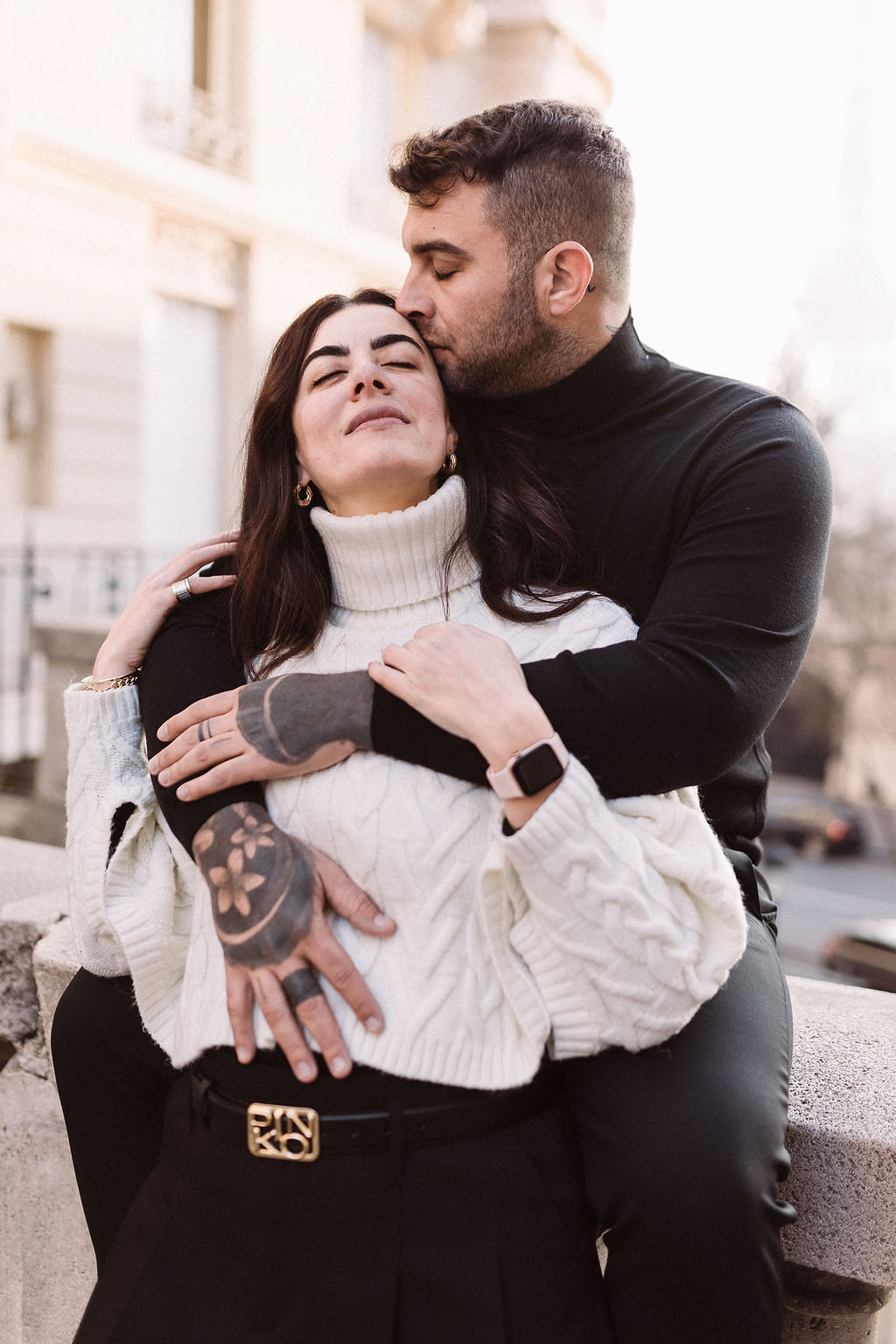
Editorial without assigned roles: a note for queer couples
Editorial direction has a history of gendered posing: who leads, who leans, who looks down. For many queer, trans and non-binary couples, that history is exactly why posing feels uncomfortable.
Direction does not have to work that way. Prompts can be built around what you actually do together, not around roles. I ask how you like to be held, which side you prefer, which words you use for each other, and I adjust from there. I explain this approach in more detail in my guide to choosing a queer wedding photographer in France.
How I work: documentary first, editorial with intention
Most of your wedding day, I work quietly and observe. I do not interrupt the ceremony, the speeches or the moments with your families. That is the documentary part, and it makes up most of the gallery.
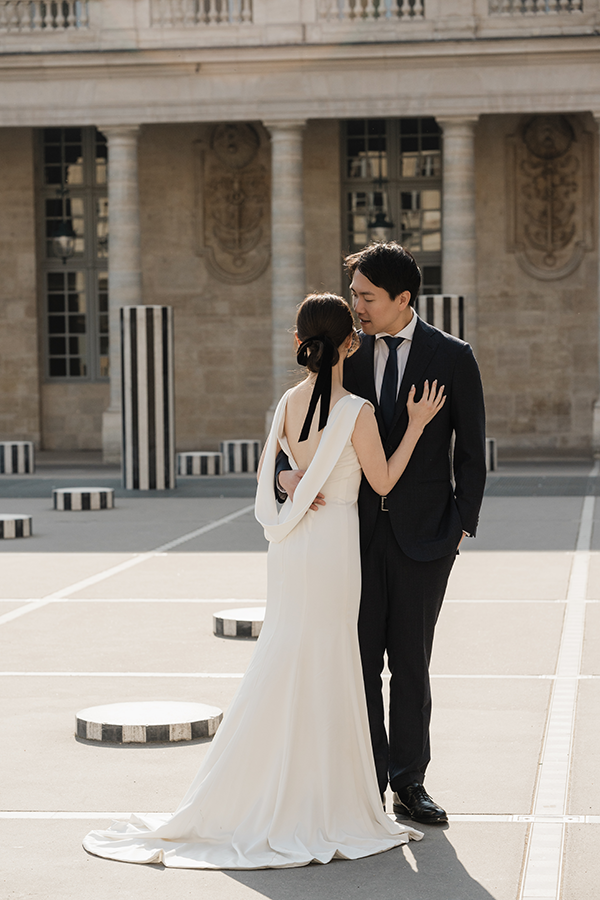
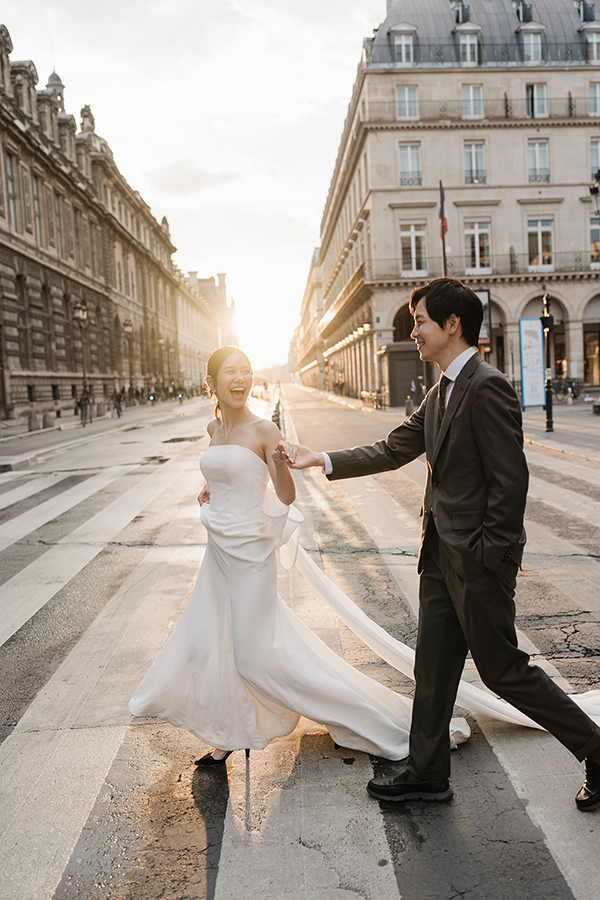
Then, at two or three moments we plan together, I become more present. We step away for a few minutes, I choose the light and the setting, and I guide you with simple prompts. Those portraits are where the editorial side appears: in a Paris palace, in a château garden, or in a quiet street at the end of the day.
If you are planning a destination wedding, I help you place those moments in your timeline so they never take time from your guests. Some couples also add a couple session in Paris before or after the wedding, which leaves even more room for editorial images.

How to tell a photographer’s real style before you book
Websites show highlights, and highlights are usually the most editorial frames. To understand how a photographer really works:
- Ask for a full gallery, not just a selection. You will see the ratio of directed to spontaneous images.
- Ask how much time portraits take on a typical wedding day.
- Ask what they do when the light is bad. Documentary photographers adapt; editorial photographers create.
- Ask how they direct people who dislike posing. The answer tells you more than any label.
You can see full stories from my weddings in the gallery and read how I cover a wedding day on my destination wedding photography page.
Frequently asked questions
Is editorial wedding photography the same as posed photography?
Not exactly. Classic posed photography follows standard formulas, such as group lines and set poses. Editorial photography is directed too, but it is driven by light, composition and mood, closer to a fashion shoot than to a formal portrait.
Is documentary wedding photography the same as candid photography?
They overlap. “Candid” usually means unposed images. Documentary goes further: it aims to tell the whole story of the day in order, including details and small moments, without staging them.
How much time do editorial portraits take on a wedding day?
With a loose editorial approach, I usually plan two or three short moments. The exact length depends on your timeline and your venue, and we decide it together during planning.
Can we have editorial portraits if we feel awkward in front of the camera?
Yes. Loose editorial direction is designed for that. Prompts give you something to do rather than a pose to hold, which is usually what helps people relax.
Planning your wedding in France?
If you want images that feel like you, with the beauty of the place and the truth of the day, tell me about your plans. I photograph weddings and elopements in Paris, across France and abroad, for international and queer couples.