


Many couples who dream of marrying in France find out late that the ceremony they imagine and the ceremony the law recognises are not always the same thing. France has strict rules about who can marry, where, and with which papers. None of them is hard to follow once you know them. They just need to be known early.
This guide explains how legal marriage works in France for foreign couples, what changes if one of you is French or lives here, and the alternatives open to international couples. I photograph weddings in Paris and across France for international and queer couples, so I also share what these rules mean for your photos.
This article is general information, not legal advice. Rules can change and some depend on your nationality: always confirm with the town hall (mairie) where you plan to marry and with your embassy or consulate.
The short answer
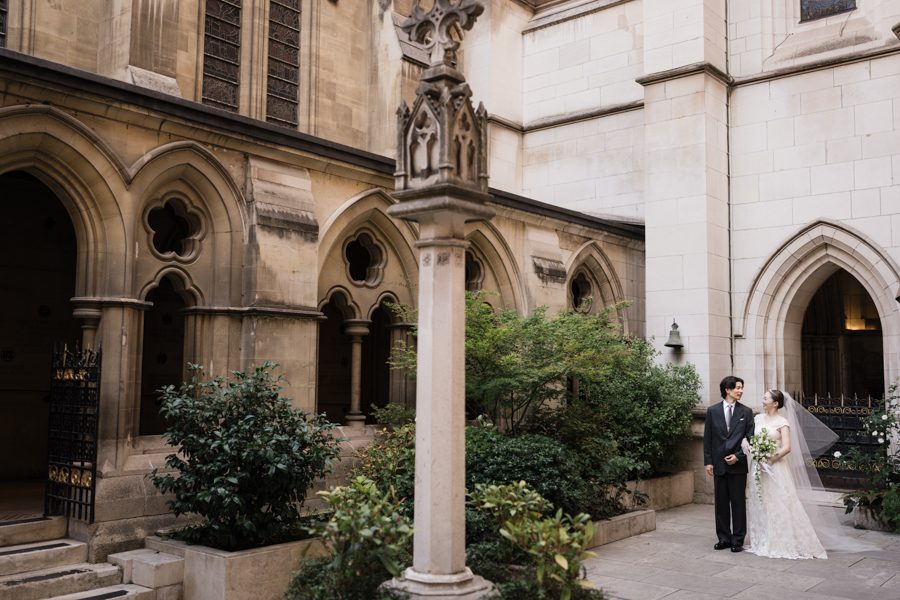
In France, only a civil ceremony performed by a mayor or deputy mayor at the mairie creates a legal marriage. To marry there, at least one of you, or one of your parents, must live in that town: either have your home there or have lived there continuously for at least one month when the banns are published. Two foreigners who do not live in France generally cannot marry at a French mairie. They usually marry at home, or at their own country’s consulate in France, and then hold a symbolic celebration in France.
Civil, religious, symbolic: what counts legally
France separates three kinds of ceremonies, and the difference matters for planning.
- Civil ceremony. Held at the mairie, in French, by an officer of the civil status. It is the only ceremony with legal value. It is short, often 20 to 30 minutes, and it is free.
- Religious ceremony. In France, a religious wedding cannot legally take place before the civil one. Ministers are required to see proof of the civil marriage first.
- Symbolic ceremony. Led by a celebrant, a friend or a family member, in a garden, a château or a rooftop. It has no legal value, but it gives you complete freedom over language, length, rituals and who speaks.
Many international couples combine two of them: a legal marriage at home or at the mairie, and a symbolic ceremony in France that feels like their own.
Who can marry at a French mairie
The residence rule
French law requires a lasting link between the couple and the town. You can marry in a commune where one of you has your home or has lived continuously for at least one month on the date the banns are published. The home or residence of one of your parents also counts. Being born in a town is not enough, and neither is renting a holiday flat for a weekend.
If one of you is French or lives in France
This is the simplest case. You can marry in the town where the French partner, the resident partner or one of their parents lives. The foreign partner adds a few documents to the file, described below.
If neither of you lives in France
According to Service-Public, the official French administration website, two foreigners who do not live in France can marry here only at the consulate of their country of origin, or in some French overseas territories. Consulates usually perform marriages only when both partners hold that country’s nationality, so check with yours directly.
Same-sex couples
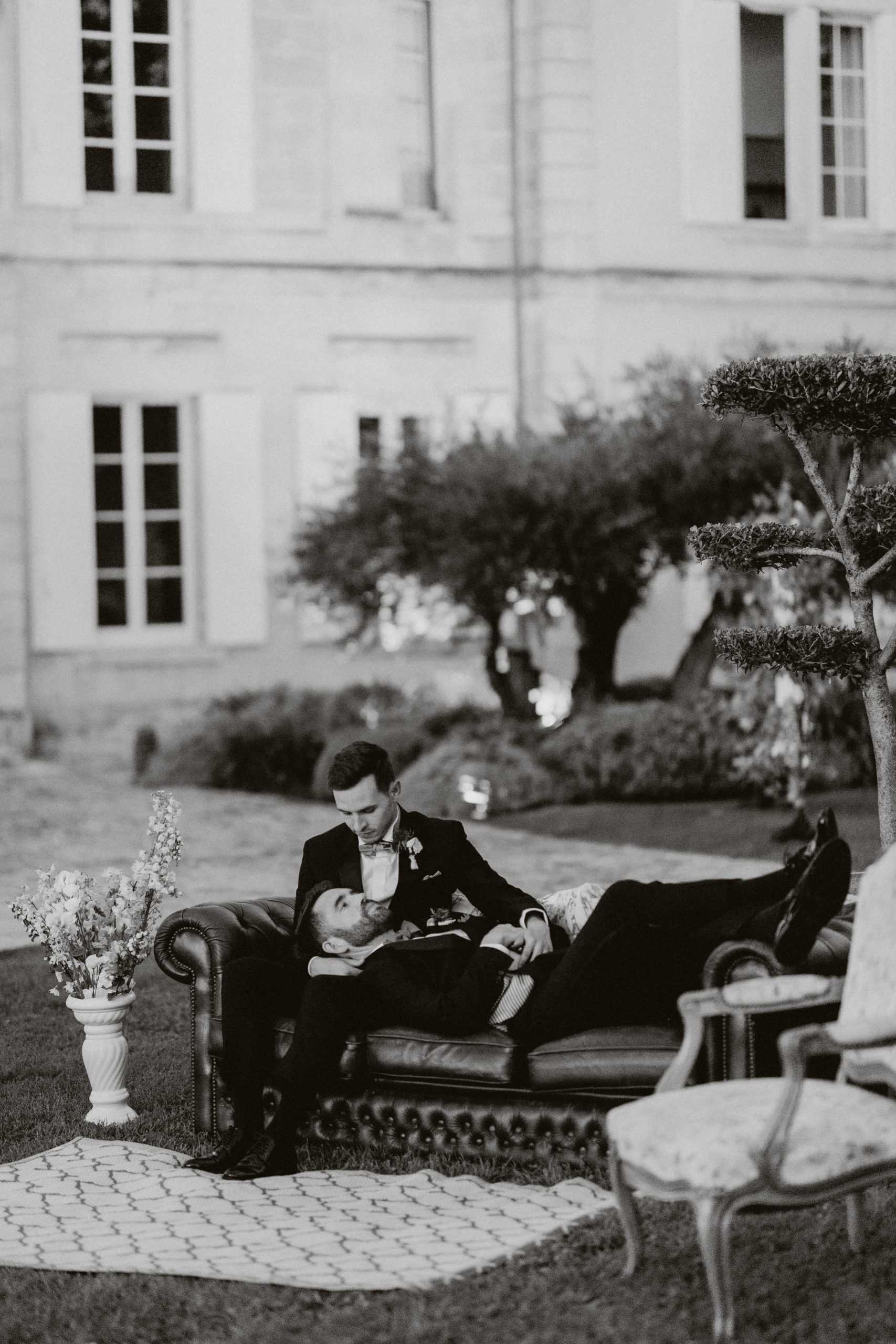
Marriage has been open to same-sex couples in France since 2013, under exactly the same conditions. For foreign couples, French law generally allows the marriage when one partner is French, or lives in a country that recognises same-sex marriage. Some bilateral agreements create exceptions for certain nationalities, so this is worth checking with the mairie early.
The documents you will need
Each mairie publishes its own list, but the core file is the same everywhere:
- a valid passport or ID card for each partner, with a copy;
- proof of address in the town (mobile phone bills, bank details and sworn statements are not accepted);
- a recent copy of your birth certificate: less than three months old if it was issued in France, up to six months old if it was issued abroad;
- for foreign partners, a certificat de coutume from your embassy or consulate, which explains your country’s marriage rules and confirms you are free to marry;
- information about your witnesses: at least two and at most four, with their ID and address.
Documents in a foreign language must be translated by a sworn translator in France. Depending on your country, they may also need an apostille or a legalisation. Ask early, because embassies and translators can take several weeks.
The steps and the timeline
- Contact the mairie to ask for its list and its procedure. Many Paris mairies work by appointment.
- Submit the file in person.
- Attend the interview. The officer meets you together, and sometimes separately. It is a standard step, not a sign of suspicion.
- Banns are published for ten days at the mairie. The wedding cannot take place before the tenth day after publication, and must happen within the following year.
- The ceremony takes place on the date the mairie gives you. In large cities, popular Saturdays fill up fast.
In practice, I advise couples to start the process three to four months before the date they want, especially in Paris. That leaves room for translations, a missing document, or a second appointment.
What this means for your photos
A mairie ceremony is short and the room is not yours: other couples often marry the same day, sometimes every half hour. A few things help:
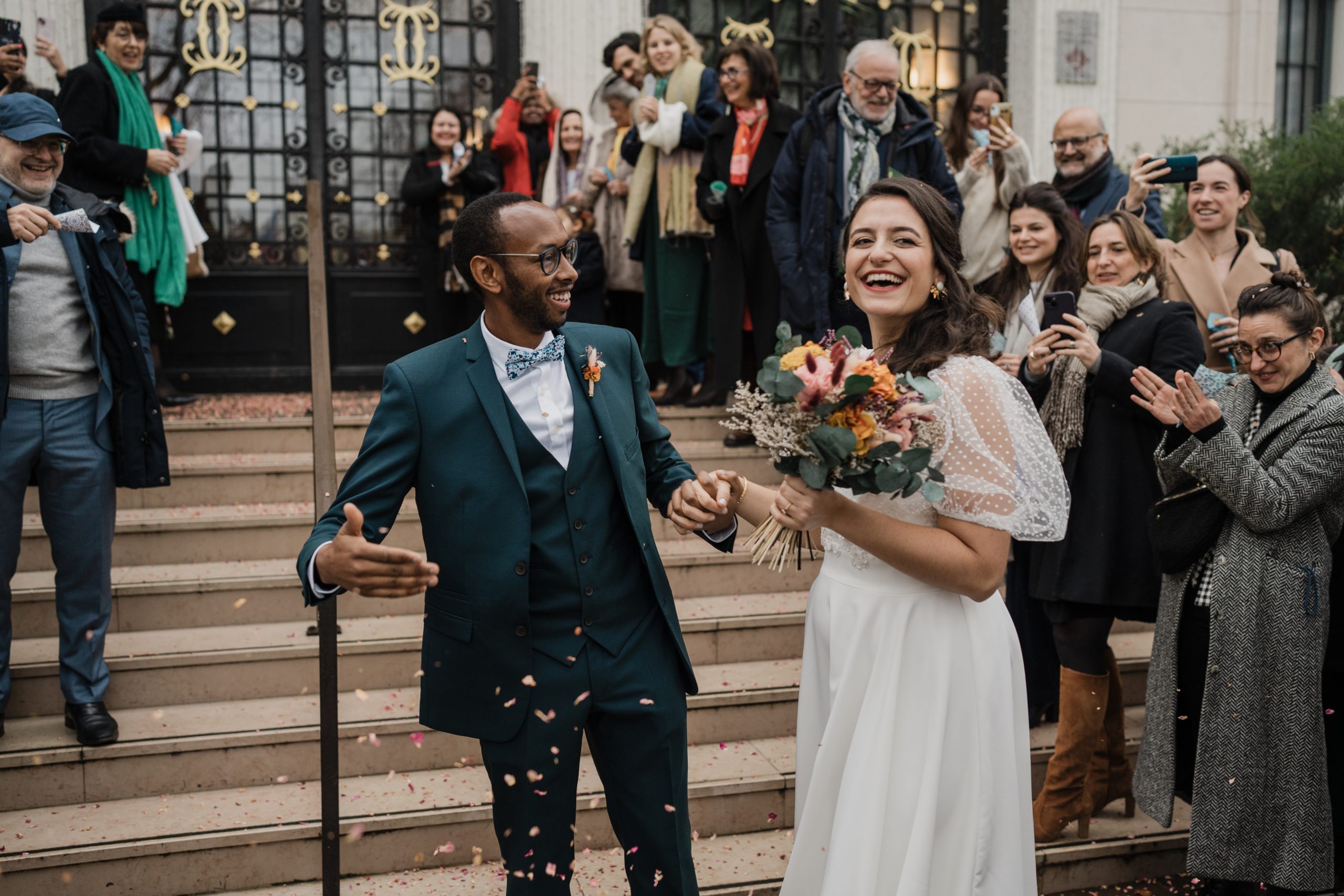
- Plan time outside. The steps of the mairie and the street around it are where the confetti, the hugs and the first walk as a married couple happen. Ask your guests to wait outside rather than leave straight away.
- Ask about photography rules. Most salles des mariages allow photos during the ceremony, but each mairie sets its own rules about moving around the room.
- Keep the portraits for later. With a tight slot, I photograph the ceremony and the families on the spot, and we take the couple portraits afterwards, nearby, in better light.
Some Paris town halls are very beautiful rooms in their own right. If you can marry in Paris, my guide to the most beautiful Paris town halls (in French) shows what each one looks like, and you can see how I cover civil weddings in Paris (in French).
Options for international couples
Legal at home, celebration in France
You sign the papers in your home country, sometimes a few days before, and travel to France for the wedding you actually want. Your ceremony can be in English, bilingual or in three languages, at the hour of your choice, with the people you choose to lead it. It is the route many international couples take.
Consular wedding, then a party
If you share a nationality and your consulate offers marriages in France, you can marry legally in Paris and celebrate the same day or the next.
An elopement
Just the two of you, or a handful of guests, a symbolic exchange of vows in a quiet place, and time to explore the city together. My guide on where to elope in Paris lists the places that work best.
Whatever you choose, planning a destination wedding in France starts with this decision, because it shapes your dates, your guest list and your budget. If you are a queer couple, my guide to choosing a queer wedding photographer in France covers what to ask before you book.
Frequently asked questions
Can two foreigners get married in France?
Yes, if at least one of you, or one of your parents, lives in the town where you marry, with at least one month of continuous residence when the banns are published. If neither of you lives in France, you can usually marry only at your country’s consulate, or hold a symbolic ceremony.
Is a symbolic ceremony in France legally binding?
No. Only the civil ceremony at the mairie, or a marriage performed by a consulate under its own law, is legally valid. A symbolic ceremony is a celebration, not a legal act.
How long does it take to get married at a French mairie?
The banns alone take ten days, but preparing the file, getting translations and booking a date usually takes several weeks to a few months. Starting three to four months ahead is a safe margin.
Can the civil ceremony be held in English?
The ceremony is conducted in French. If one of you does not speak French, the mairie may ask you to bring an interpreter. Check with the mairie when you submit your file.
Can same-sex foreign couples marry in France?
Generally yes, under the same conditions as other couples, provided one partner is French or lives in a country that allows same-sex marriage. Some nationalities are affected by bilateral agreements, so confirm with the mairie.
Planning your wedding in France?
Once you know which ceremony will be legal and which one will be yours, the rest of the planning becomes much simpler. If you want a photographer who knows both the mairie and the symbolic side of a French wedding, tell me about your plans. You can also see how I work on my destination wedding photography page.
Source: Service-Public.fr, marriage formalities in France (official French administration website, in French).